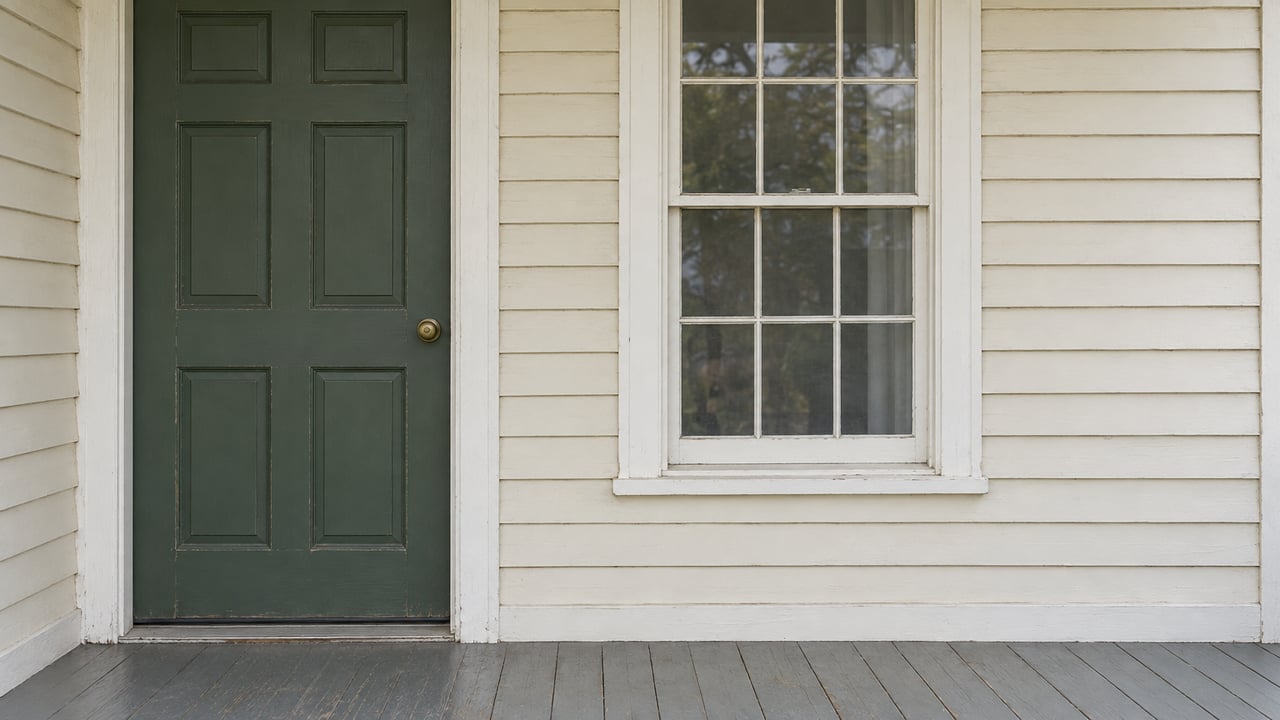
You've made an offer on a rowhouse near Washington Street. The listing calls it historic, the county tax record calls it historic, and a quick search of the Maryland Historical Trust's map confirms it: historic. You assume that means something specific, maybe a form to sign at closing, maybe a plaque. Then you go to replace the failing windows before winter and find out the City of Cumberland requires a Certificate of Appropriateness for the project, and its commission meets once a month, with a paperwork deadline that closed last week.
This is the part of buying or renovating in Cumberland that catches people off guard. Not because the rules are secret. They're published on the city's own website. It's because "historic" in Cumberland is actually three unrelated labels, and most people assume they're one thing.
Three Labels, One Word
The first label is the National Register of Historic Places. Much of downtown Cumberland was added to the National Register in 1983, as part of the same era that closed Baltimore Street to traffic and turned it into a pedestrian mall. National Register status is a federal acknowledgment of a place worth conserving. It does not, on its own, control what an owner can do to a house. A property review under the Register only kicks in if federal or state money, licenses, or permits touch the project, a process known as Section 106 review. If you're paying cash and pulling a standard building permit, that layer of federal law never activates.
The second label is the Maryland Inventory of Historic Properties, a state database run by the Maryland Historical Trust that catalogs more than 43,000 historic and architectural resources statewide. Being listed in this inventory is a research and educational designation. It doesn't trigger any regulatory review at all.
The third label is the one that actually has teeth: the City of Cumberland's own Canal Place Preservation District, created by local ordinance and enforced by the city's Historic Preservation Commission. This is a zoning designation, not an honorary one, and it's the only label of the three that requires approval for exterior changes.
What Actually Needs a Permit
If your property sits inside the Canal Place Preservation District, the city's rule is broad on purpose. Cumberland's own guidance states that a Certificate of Appropriateness is required for all exterior changes to a structure, including painting, additions, alterations, awnings, entrances and doors, porches, fences, siding, signage, window replacement, demolition, and new construction. Interior work is a different story. The Historic Preservation Commission's review does not extend to interior arrangements, zoning, or how a building is used, so gutting a kitchen or finishing a basement doesn't require the city's sign-off the way swapping out the front windows does.
That's a meaningful distinction for anyone budgeting a renovation. The interior can move on your timeline. The exterior moves on the city's.
The Meeting Only Happens Once a Month
Here's the friction that turns a permitting rule into a real scheduling problem. The Historic Preservation Commission meets on the second Wednesday of each month, and applications have to be submitted by the first Wednesday, one week ahead, to make that month's agenda. Applications go through the city's Citizenserve portal or in person at Community Development in City Hall.
Miss that monthly cutoff and you're not waiting a few days. You're waiting until next month's second Wednesday. If you're trying to finish exterior repairs before a home hits the market in spring, or before winter weather makes exposed siding a bigger problem, that once-a-month clock is worth building into the plan from the day you go under contract, not the week you're ready to start work.
A Second, Unrelated Clock: Lead Paint
Age brings a separate compliance question that has nothing to do with the Historic Preservation Commission. The Maryland People's Law Library explains that any home built before 1978 falls under federal lead paint disclosure law, and Maryland layers its own rule on top through the Reduction of Lead Risk in Housing Act, Renting the property changes everything.
Under federal law, anyone selling a home built before 1978 has to give buyers the EPA pamphlet "Protect Your Family From Lead in Your Home," allow a 10-day window for a lead inspection before the buyer is locked into the contract, and include specific disclosure language in the sales contract itself. That applies whether the seller lives in the house or rents it out.
Maryland's Reduction of Lead Risk in Housing Act only regulates rental units built before 1978. Owner-occupied homes are not covered by the state registration requirement at all. If you're buying a pre-1978 house in Cumberland to live in, the federal disclosure at your purchase is the whole story. If you're buying the same house to rent out, the state adds an ongoing obligation: the Maryland Department of the Environment requires registration, renewed every year by December 31, at $30 per unit, plus a passing lead risk reduction inspection certificate that has to stay current at each tenant turnover. Properties certified lead-free or limited lead-free by MDE are exempt from the registration requirement.
Here's how that plays out in practice:
| Scenario | Federal Requirement | Maryland Requirement |
|---|---|---|
| Selling a pre-1978 home, owner-occupied | EPA pamphlet, 10-day inspection window, signed lead disclosure at contract | None beyond the federal disclosure, no state registration required |
| Renting a pre-1978 unit | Same federal pamphlet and disclosure, provided at each new tenancy | MDE registration, renewed annually by December 31 ($30/unit), plus a current passing lead risk reduction inspection certificate |
When the Two Clocks Overlap
The scenario where both mechanisms collide is common enough to plan around: an investor buys an older home inside the Canal Place Preservation District, intending to convert it to a rental. That single decision, rent it instead of live in it, triggers the state's ongoing MDE registration and inspection cycle on top of whatever exterior work the Historic Preservation Commission needs to sign off on first.
If the plan involves new windows, exterior paint, or porch repairs before that first tenant moves in, the practical sequence matters. The Certificate of Appropriateness has to clear the commission's monthly meeting before the exterior work can legally start. The lead risk reduction inspection, separately, has to pass before a lease begins. The approvals are separate, so open both applications as soon as the deal closes rather than assuming one approval covers the other.
None of this makes Cumberland's historic housing stock a bad investment. The corridor's older homes, many of them the same blocks that anchored the Baltimore Street revitalization, remain some of the most character-rich and affordably priced properties in Western Maryland. It just means the word "historic" on a listing sheet is doing less work than it looks like, and the rules are administered separately.
A Few Questions Worth Asking Before You Write an Offer
Does National Register status alone require me to get permission before repainting my house? No. Listing on the National Register is honorary unless federal or state funding, licenses, or permits are part of your project, which triggers Section 106 review. A standard repaint with no federal money involved doesn't require that review.
Does interior renovation need a Certificate of Appropriateness? No. The Historic Preservation Commission's review covers exterior architectural features only. Kitchens, bathrooms, and other interior work fall outside its authority.
If my rental is certified lead-free, do I still need to register it with the state? No. Properties that MDE has certified as lead-free or limited lead-free are exempt from Maryland's registration requirement under the Reduction of Lead Risk in Housing Act.
Buying or selling an older home in Cumberland means dealing with city zoning and state environmental law at the same time, and they run on separate calendars with separate paperwork. Homes by Pamela Terry has spent two decades walking Western Maryland buyers, sellers, and small investors through exactly this kind of overlap. If you're weighing a historic Cumberland property, especially one you might rent out, let's map both clocks before you write the offer, not after.
This article is general information, not legal, tax or financial advice. Consult a qualified professional about your situation.