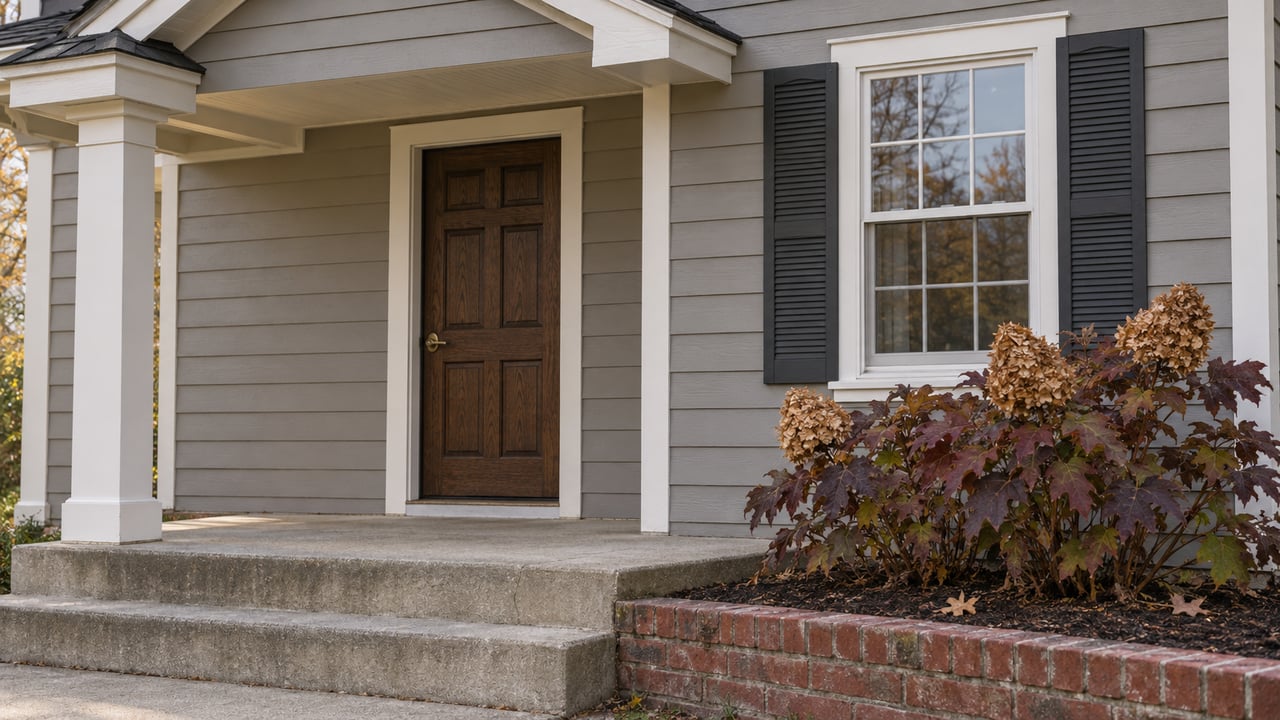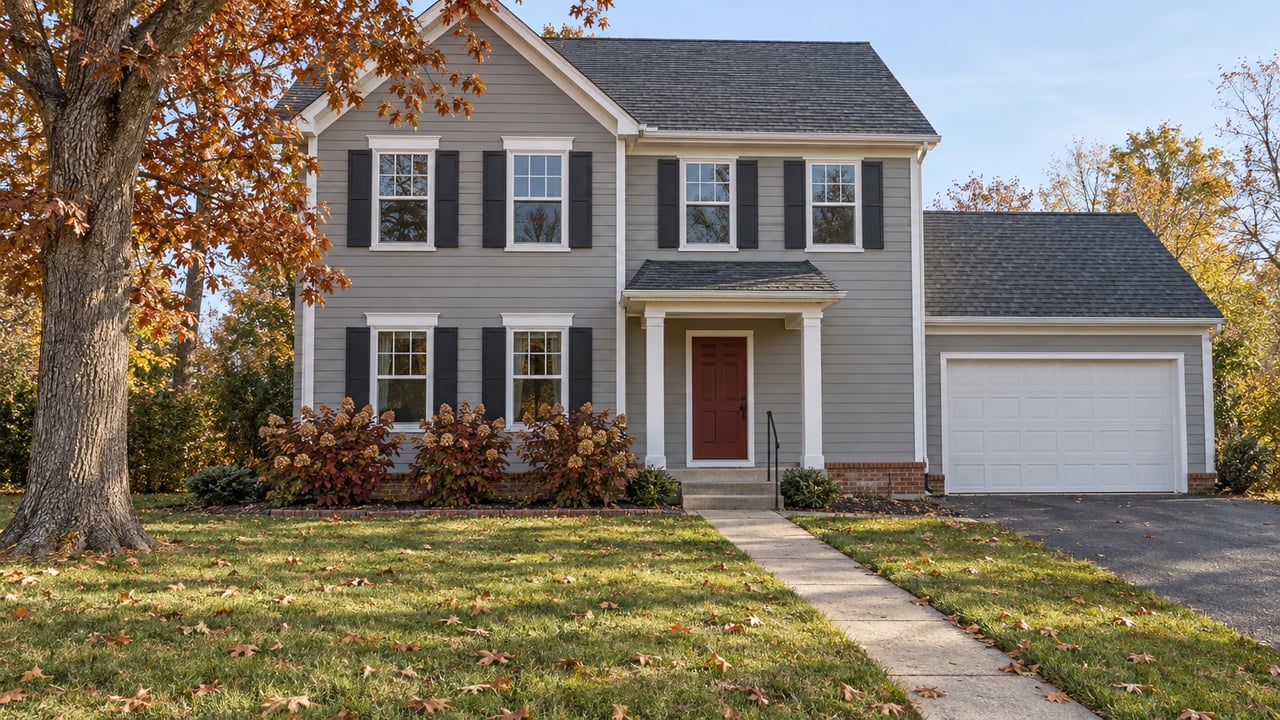
"If you plan to live in this home as your principal residence, you may qualify for the Homestead Property Tax Credit. The Homestead Property Tax Credit may significantly reduce the amount of property taxes you owe."
Since a 2021 change in Maryland law, every residential sales contract in the state has to include those two sentences, and the settlement agent has to give the buyer a copy of the homestead application at closing, according to the Maryland Department of Assessments and Taxation. Most buyers sign right past that paragraph. In Hagerstown it helps explain a mismatch that catches people at their first tax bill. The tax figure on a listing shows what the current owner pays, and a long-time owner's bill can sit well below what a new owner will pay on the same house at the same rate.
The Number on the Listing Belongs to the Seller
Maryland's Homestead Credit limits how fast the taxable assessment on an owner-occupied home can rise each year. Under state law the cap can be no higher than 10%, and local governments can set it lower. SDAT describes the credit as applying to the part of an increase above the cap, so "the homeowner pays no property tax on the market value increase which is above the limit."
The credit depends on who owns the house and how long they have owned it. SDAT grants the credit only if, during the previous tax year, "the property was not transferred to new ownership," and the home must be the owner's principal residence. A seller who has held the credit for years has built up a cushion between the taxable assessment and the state's full phased-in assessment. When the house sells, the cushion stays with the seller. The buyer's bill is figured from the house's phased-in assessment, and the buyer has to apply for the credit on their own. SDAT mails that one-time application to new owners once the deed is recorded.
How much this matters depends on how far assessments have moved past the cap. In Washington County, they have moved a long way.
Two Reassessments That Outran a 5% Cap
Washington County and the City of Hagerstown both set the homestead cap at 5%, which is half the state ceiling. The county says its 5% cap took effect July 1, 2007. Hagerstown's FY27 budget says the Mayor and City Council worked with the county to lower the limit on owner-occupied homes from 10% to 5%. SDAT's 2026-2027 tax rate and homestead cap table lists both at 5% for the current tax year.
SDAT reassesses each third of Maryland's properties once every three years. Look at what happened to Washington County's "Group 2" properties over the last two rounds:
- In SDAT's January 1, 2023 reassessment, released December 29, 2022, the county's Group 2 residential value rose 36.8% from its January 1, 2020 base.
- In the January 1, 2026 reassessment, released December 30, 2025, the same group rose another 22.8%, and 98.91% of the county's reassessed improved residential properties went up in value.
The Herald-Mail reported in January 2026 that Washington County led Maryland in residential assessment growth in that round. The statewide residential average for Group 2 was 13.2%.
According to SDAT's Homeowner's Guide, state law requires an increase in value to be phased in equally over the three years between reassessments. A 36.8% jump works out to about 12% a year in phased-in value, and a 22.8% jump to roughly 7.6% a year. A homestead owner's county and city taxable value can grow only 5% a year. The difference between those two paths keeps widening, and two strong reassessments in a row stack one widening gap on top of the other.
How the Gap Builds on One Hypothetical House
The arithmetic below follows the method in SDAT's own worked example. Picture a Group 2 home in the City of Hagerstown assessed at $100,000 going into the 2023 reassessment. Its owner occupies it and has the credit on file, and its value tracks the county averages exactly. Real houses move differently, so the figures only show the mechanism. They are not an estimate for any specific address.
| Tax year | Phased-in assessment a buyer would be taxed on | Seller's taxable assessment under the 5% cap | Assessment the seller isn't taxed on |
|---|---|---|---|
| 2023-24 | $112,267 | $105,000 | $7,267 |
| 2024-25 | $124,533 | $110,250 | $14,283 |
| 2025-26 | $136,800 | $115,763 | $21,037 |
| 2026-27 | $147,197 | $121,551 | $25,646 |
| 2027-28 | $157,594 | $127,628 | $29,966 |
| 2028-29 | $167,990 | $134,010 | $33,980 |
Inside city limits, the county and city rates for 2026-27 add up to $1.86 per $100 of assessed value. At that rate, the $25,646 shielded in the current tax year is worth about $477 in local tax. If rates stay where they are, it grows to about $632 by 2028-29. The state portion uses a separate 10% cap and a $0.112 rate, so this table leaves it out.
The relationship matters more than the dollar amounts. On a house assessed at two or three times this example, the gap scales with it. A seller who bought before 2020 and has carried the credit through earlier cycles may have an even wider cushion than the table shows.
The City Line Moves the Rate Too
Where a house sits relative to the Hagerstown city limit changes the rate the assessment is multiplied by. For 2026-27, SDAT lists these rates per $100 of assessed value:
| Location | City rate | County rate | State rate | Combined |
|---|---|---|---|---|
| Inside the City of Hagerstown | $1.057 | $0.803 | $0.112 | $1.972 |
| Unincorporated Washington County | none | $0.928 | $0.112 | $1.040 |
The county rate is lower inside the city because of a county tax rate differential that began in 2010/11 and replaced an earlier county tax rebate. Hagerstown's FY27 budget puts the differential at $0.125 per $100 and notes that every municipality in the county gets the same amount. Even with that reduction, the combined rate inside the city is nearly double the rate outside it. That makes the homestead gap matter more on a city address, because each dollar of assessment the seller wasn't taxed on costs the buyer more there.
Why a Steady Rate Still Means Bigger Bills
Neither government raised its rate this year. Washington County's FY2027 operating budget kept the real property rate at $0.928 and still projects property tax revenue up 9.62%, which it attributes to a larger taxable base from reassessments. The City of Hagerstown kept its rate at $1.057 for July 1, 2026 through June 30, 2027 in an ordinance passed May 19, 2026. That matches its FY26 rate.
The city's FY27 budget also reports the state-certified constant yield rate, which is the rate that would bring in the same gross real property revenue as the year before. For FY27 that rate was $1.0343 per $100, below the $1.057 the city kept. So a steady rate does not mean steady bills. Assessments keep rising underneath it. A long-time owner feels only 5% of that rise each year. A buyer pays tax on the full phased-in assessment.
Checking a Specific Hagerstown House Before You Offer
The reassessment percentages above are county totals, and the table follows a hypothetical house. The record for an actual address is public, and SDAT's Real Property search shows it. On the property's page, look at:
- The phased-in assessment for the current tax year. This is the base for a new owner's bill.
- The homestead application status, shown at the bottom of the page. An "Approved" status means the current owner's bill likely reflects the credit.
- The date of the most recent reassessment. This tells you whether the house is early or late in its three-year phase-in.
Multiply the phased-in assessment by $1.972 per $100 for a city address or $1.040 for an unincorporated one, and compare the result with the listing's tax figure. A wide difference usually means the seller's credit is part of the listing number. After closing, the homestead application can be filed through Maryland One Stop, and SDAT says it only needs to be filed once while you own the home.
This is general information about how Maryland's assessment and credit rules work, not legal, tax or financial advice. Confirm your own numbers and eligibility with SDAT, your settlement agent or a tax professional.
FAQ
Does the seller's homestead credit carry over at closing?
No. SDAT's conditions require that the property was not transferred to new ownership during the previous tax year, so the credit tied to the seller's ownership history does not pass to the buyer.
Does this apply to a Hagerstown rental purchase?
The credit applies only to the owner's principal residence. SDAT says the 2007 application requirement was created because some owners were getting the credit on vacation homes and rented properties. An investor buying a rental should expect taxes on the full phased-in assessment every year.
When will Washington County's Group 2 values be reassessed again?
SDAT reassesses each group once every three years and mails notices in late December. On that schedule, the properties reassessed for January 1, 2026 come up again for 2029, with notices at the end of 2028. Homes in Groups 1 and 3 follow their own cycles, which the SDAT record shows for each address.
Before you make an offer on a Hagerstown home, it helps to know whether the tax figure on the listing belongs to the seller or to the house. Pamela can pull the assessment record with you and work out what your bill would likely be. Reach out to Homes by Pamela Terry and Work With Pamela to run those numbers before you sign.