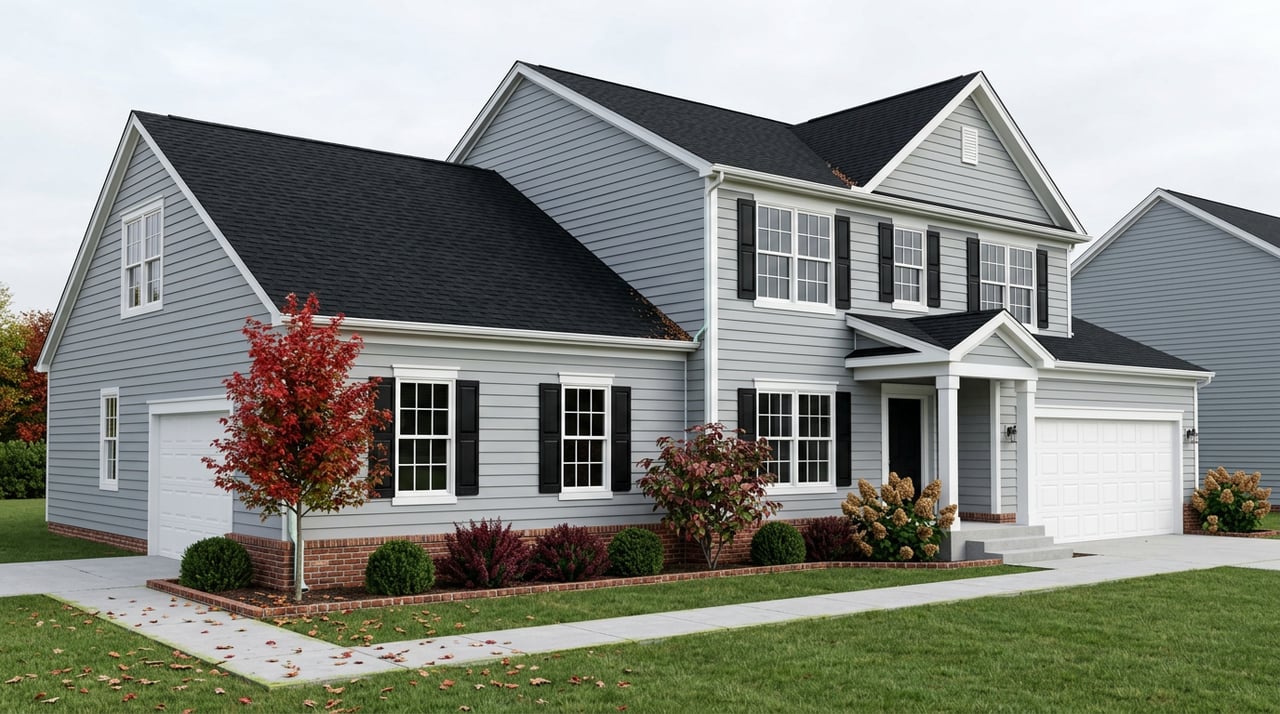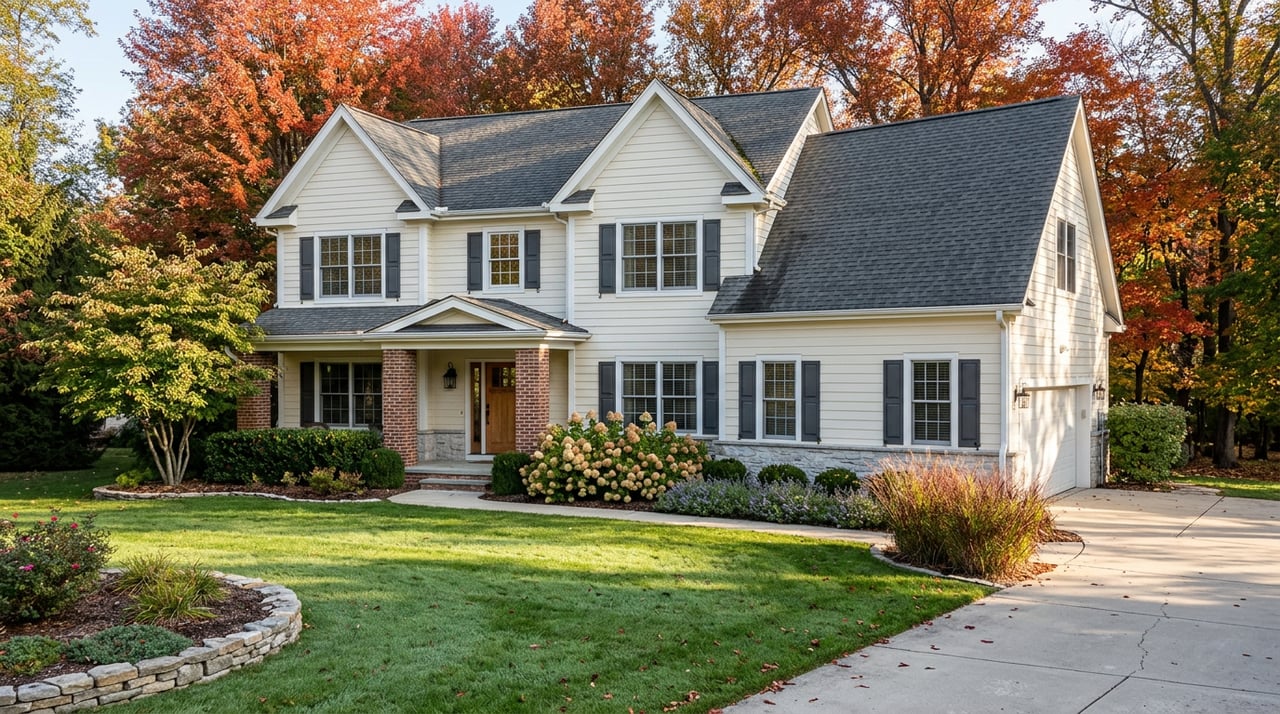
Say you've got two accepted offers sitting on your kitchen table. One is a three-bedroom on the West Virginia side, a short drive south of Cumberland into Mineral County. The other is a nearly identical house, same price, same square footage, inside Cumberland's city limits. You've already run the numbers on the mortgage. What you probably haven't run are the numbers on everything else, because the two closing statements you're about to sign look nothing alike, and the gap doesn't stop at the settlement table.
That gap is the actual story here. Not which town has the better downtown, or which side of the Potomac has more character. It's the tax structure underneath both states, and it's large enough that a buyer who ignores it can end up thousands of dollars off from what they expected in year one alone.
The Closing Table Looks Different Before You Even Move In
Run the same $150,000 sale through both settlement processes and the difference shows up immediately. In Allegany County, Maryland, a deed transfer carries a combined state and county transfer tax of 1.0 percent, plus a separate recordation tax of $6.50 per $1,000 of the sale price, which works out to another 0.65 percent. Add those together and you're looking at roughly $2,475 in transfer-related taxes alone on that $150,000 house, before title insurance or attorney fees enter the picture.
West Virginia handles this differently. The state charges an excise tax of $1.10 per $500 of value, and counties add their own portion on top, typically bringing the combined rate to somewhere between about 0.33 and 0.44 percent depending on the county. On that same $150,000 sale, you're looking at something closer to $500 to $660 in transfer tax, customarily paid by the seller rather than split or shifted to the buyer.
West Virginia does claw some of that back in a different way. It's an attorney state, meaning a licensed real estate attorney has to be part of every closing, not just a title company. That typically adds $750 to $1,250 to the transaction, a cost Maryland buyers and sellers simply don't carry since Maryland closings run through title companies without a mandatory attorney requirement.
Net it out and West Virginia still comes out ahead at the settlement table on a comparably priced home, even after the attorney fee. That's before you get to what happens every year after you move in.
The Tax You Pay Every April, Not Just At Closing
Maryland requires every one of its 23 counties, plus Baltimore City, to levy a local income tax on top of the state rate. There's no way around it if you're a Maryland resident. Allegany County's rate just went up, from 3.03 percent to 3.20 percent for tax year 2026, confirmed by the Maryland Comptroller and reported by Bloomberg Tax in February 2026. West Virginia has no equivalent layer at all. Whatever bracket the state puts you in is the entire bill.
Run that through a simple example. A household with $70,000 in Maryland taxable income pays $2,240 a year in Allegany County's local tax alone at the new 3.20 percent rate, on top of the state income tax bracket that applies to that income. A household earning the identical amount while living on the West Virginia side of the line pays zero county or municipal income tax, because West Virginia doesn't impose one.
This matters most to working households drawing a paycheck. It matters much less to retirees living primarily on Social Security, since Maryland fully exempts Social Security benefits from state income tax regardless of how much other income a retiree has. If your income is largely Social Security, this particular gap barely touches you. If you're still earning wages, it's a bill you pay every single year you live on the Maryland side, not a one-time cost.
One more wrinkle worth knowing if you work in Maryland but plan to live across the line: nonresidents who earn income in Allegany County pay a flat local rate around 1.25 percent, separate from the resident rate. It's a smaller bite, but it means West Virginia residency doesn't fully insulate you from Allegany County's tax reach if your paycheck still comes from a Maryland employer. Confirm your specific situation with a tax professional before assuming either way.
Same Corridor, Different Property Tax Bill
Property taxes tell a similar story. In Keyser, effective property tax rates run around 0.72 percent of market value, with a typical annual bill near $650 on a median-priced home in the low $80,000s. Across the line in Allegany County, the effective rate runs closer to 1.08 percent as of 2026 figures, with a median annual bill around $1,609 on a median home value near $149,200.
That's roughly $950 more a year in property tax on the Maryland side, comparing typical bills rather than identical homes, which is the fairer way to look at it given the different price points on each side of the corridor.
One thing to keep in mind if you're shopping specifically within Allegany County: the county's own fiscal year 2026 rate tables show towns like Cumberland and Frostburg layering their own municipal tax rate on top of the base county charge. Two houses that look identical on paper, both inside Allegany County, can carry different total tax bills depending on whether one sits inside an incorporated town's limits and the other sits out in the unincorporated county. It's worth asking specifically which side of a town boundary a listing falls on, not just which county.
| Keyser, WV (Mineral County) | Cumberland, MD (Allegany County) | |
|---|---|---|
| Local income tax | None | 3.20% (up from 3.03% for tax year 2026) |
| Effective property tax rate | ~0.72% | ~1.08% |
| Typical annual property tax bill | ~$650 | ~$1,609 |
| Transfer/excise tax on $150,000 sale | ~$500-$660 | ~$2,475 |
| Attorney required at closing | Yes | No |
The One Lever Heavy Enough To Flip The Math
Here's where the comparison stops being straightforward. On paper, West Virginia wins almost every category above. But Cumberland has a program that can change the calculation entirely for the right buyer, and it's not a tax rate at all. It's cash.
The Choose Cumberland Relocation Program offers $10,000 in relocation cash plus up to another $10,000 in dollar-for-dollar matching funds toward a down payment or renovation on a home inside Cumberland's city limits, for a total of up to $20,000. The program targets people who currently live outside Allegany County and either work remotely or are relocating for a job, and it requires five years of residency to keep the full amount. The Baltimore Banner reported on the program's launch and its modeling on similar initiatives in Rochester, New York and West Virginia, and the National Association of Realtors ranked Cumberland among the fastest-growing housing markets in the country for 2024.
Twenty thousand dollars covers close to nine years of the $2,240 local income tax difference on a $70,000 household income, or about two decades of the roughly $950-a-year property tax gap between the two towns, delivered as one lump sum up front instead of trickling in as savings over time. For a remote worker who qualifies, that incentive can outweigh years of West Virginia's lighter tax structure before the math ever turns against Maryland.
The catch is that the program opens and closes its application window periodically rather than running continuously, so the smart move is confirming current availability before you count on it as part of your budget. It's real money when it's open. It's not guaranteed to be open the week you're ready to make an offer.
So Which Side Actually Wins
For a wage-earning household not eligible for Cumberland's program, West Virginia's side of this corridor is the more affordable choice across nearly every category, from the closing table through the annual tax bill. For a retiree living mostly on Social Security, the income tax gap shrinks to almost nothing, which puts more weight on the property tax and closing cost differences instead, both of which still favor West Virginia, though by a smaller margin.
For a remote worker who qualifies for Choose Cumberland and plans to stay put for five years, the math can flip. A $20,000 incentive is a real, immediate number that no tax table on either side of the river can match with an equivalent rate cut.
None of this is a reason to rule out either town. It's a reason to run the actual numbers on your specific situation, your income type, and whether you qualify for Cumberland's program, before you assume the lower list price on one side of the line is automatically the cheaper choice once you own the place.
A Few Questions That Come Up Often
Does West Virginia have any local income tax at all? No. West Virginia taxes wage income at the state level only. There is no county or municipal income tax layered on top, unlike Maryland where every county imposes one.
Who typically pays the transfer tax in West Virginia? By custom, the seller pays it, though the terms are negotiable in the purchase contract like most closing costs.
Does the Choose Cumberland program apply to any home in the county? No. It applies specifically to homes inside the City of Cumberland's limits, not the broader county, so a listing in unincorporated Allegany County or in Frostburg wouldn't qualify even though it shares a county line with Cumberland.
If you're weighing a move across this corridor and want someone who can pull the actual numbers for a specific address on either side of the state line, Homes by Pamela Terry has spent twenty years working both sides of it. Work With Pamela before you assume the sticker price tells you the whole story.